
HOA Bylaws vs CC&Rs: Key Differences Explained

You’re sitting at a board meeting and the question on the table is whether the board can pass a new rental restriction with a simple majority vote, or whether it has to go to the full membership. Someone thinks it’s covered in the bylaws. Someone else is pretty sure it’s a CC&R issue. A third board member isn’t confident there’s even a difference between the two documents.
Understanding HOA bylaws vs CC&Rs isn’t just useful background knowledge for Central Florida board members. It’s how you make confident, defensible decisions when something actually comes up. This post breaks down what each document covers, how they interact, and which one to reach for depending on the situation.
This post is for educational purposes only and should not be considered legal advice. Community-specific requirements, especially around membership voting, should always be reviewed by the association’s legal counsel.
What Are HOA Governing Documents?
HOA governing documents are the legal framework that tells your community what the rules are and how decisions get made. In Florida, most homeowners associations operate under several governing documents: typically the Declaration of Covenants, Conditions, and Restrictions (CC&Rs), the Articles of Incorporation, the Bylaws, and the Rules & Regulations. These documents follow a clear hierarchy of authority: federal and state law first, followed by the CC&Rs, then the Articles of Incorporation, then the Bylaws, and finally the Rules & Regulations.
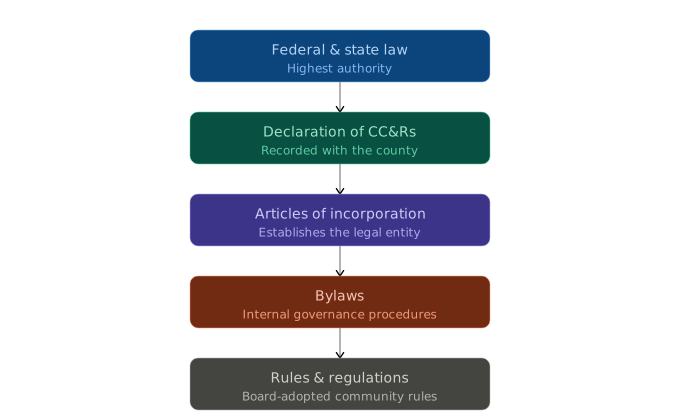
All are legally binding, but they serve different purposes and carry different levels of authority.
Florida’s Chapter 720, the Florida Homeowners’ Association Act, establishes many of the legal requirements governing HOA operations, including elections, meetings, records access, and certain amendment procedures. Boards in Central Florida are working within that specific legal framework, which is why generic national guidance on these HOA governing documents often falls short.
What Are CC&Rs?
CC&Rs — short for Covenants, Conditions, and Restrictions — are the foundational rules of community living, and they follow the property, not the owner. Think of them as the “what” of your association: the document that defines how the community looks, how property is used, and what obligations every homeowner carries. Boards can also adopt additional policies, as long as those policies don’t conflict with the recorded documents or state statutes.
What makes CC&Rs distinct from other governing documents is that they are recorded with the county, meaning a record is kept on file and the property use restrictions are tied to the property itself, not the person who owns it. When a home sells, the CC&Rs transfer automatically to the new owner. Under Florida law, amendments to the Declaration of Covenants, Conditions, and Restrictions require a membership vote and must be re-recorded with the county, making changes deliberate and intentionally difficult to reverse. When Edison’s covenant enforcement team conducts property inspections, the CC&Rs are one of the governing standards they work from, alongside the Rules & Regulations and any other adopted community policies.
What CC&Rs Typically Cover
- Property use restrictions (what can and can’t be done with a lot or unit)
- Architectural guidelines and exterior modification requirements
- Homeowner maintenance obligations
- Assessment obligations and payment requirements
- Insurance obligations for homeowners and the association
- Dispute resolution mechanisms
- Lender protection provisions
What Are HOA Bylaws?
Bylaws govern how the HOA operates as an organization — not what homeowners can do with their property, but how the board makes decisions, runs meetings, and fulfills the duties and responsibilities of board members. If the CC&Rs are the “what,” the bylaws are the “how.”
Unlike CC&Rs, bylaws do not need to be recorded with the county under Florida law, though amendments typically require a homeowner vote, with the exact process depending on the amendment provisions written in the bylaws themselves. The bylaws are also where Florida’s board certification requirement lives in practice: boards must be certified within 90 days of election under state law, and understanding the governing documents is a core part of that process.
When a question comes up about whether something requires a vote or about the responsibilities of officers, the bylaws are almost always the right document to open first.
What Bylaws Typically Cover
- The process for nominating and electing new board members
- Length of board member service terms
- Duties and responsibilities of board members and officers
- How meetings are called, noticed, and conducted
- Quorum requirements for valid votes
- Voting rights and procedures
- How the bylaws themselves can be amended
What About Rules & Regulations?
Rules & Regulations are the most flexible layer of your HOA governing documents — operational details the board can update without a community-wide vote, as long as they stay consistent with the CC&Rs and bylaws. While CC&Rs and bylaws both require a membership vote to amend, in most communities the board can adopt or amend Rules & Regulations through a board vote alone. No community-wide vote and no re-recording with the county required.
This flexibility is intentional. A community’s pool hours, for example, might need to shift seasonally or as more families move in, and it would be impractical to call a homeowner vote every time that change makes sense. Rules & Regulations allow the board to make those operational adjustments efficiently. The important caveat: no rule or regulation can contradict the covenants, conditions, and restrictions or the bylaws. When documents conflict, the hierarchy holds and the higher-ranking document always controls.
Which Document Applies to Your Situation?
The fastest way to use your governing documents well is to match the type of question to the right document. Property rules live in the CC&Rs, governance procedures live in the bylaws, and operational details live in the Rules & Regulations.
| If you’re dealing with… | Start here |
|---|---|
| Homeowner painted fence the wrong color | CC&Rs |
| Upcoming board election procedures | Bylaws |
| How long a director can serve | Bylaws |
| Pool hours or guest policy | Rules & Regulations |
| Insurance obligations for common areas | CC&Rs |
| How to call a special meeting | Bylaws |
When the documents conflict with one another, or when a board isn’t sure which document governs a particular situation, that’s exactly the kind of question a management partner should help you work through — alongside an association attorney who knows Florida law, where needed.
HOA Bylaws vs CC&Rs: The Key Difference
CC&Rs define the rules homeowners must follow as property owners. Bylaws define the rules the board must follow when governing the association. Both are legally binding, both are difficult to amend, and neither can override state or federal law — but they operate in entirely different lanes.
When a question is about what a homeowner can or can’t do, start with the CC&Rs. When a question is about how the HOA operates or how a decision gets made, start with the bylaws. Rules & Regulations fill in the operational gaps that neither document addresses at the level of detail day-to-day management requires.
Frequently Asked Questions
Are CC&Rs and bylaws the same thing?
No. CC&Rs and bylaws are two separate documents that serve different purposes. CC&Rs govern what homeowners can do with their property; bylaws govern how the association itself is run. Both are legally binding and both require a membership vote to amend, but they cover entirely different territory. Confusing them is one of the most common mistakes volunteer leaders make when they’re new to the role, and it can lead to looking in the wrong place when a decision needs to be made quickly.
What is the difference between HOA bylaws and CC&Rs?
CC&Rs cover the “what” — the rules for property use and community living — and bylaws cover the “how” — the rules for running the association. CC&Rs are recorded with the county and tied to the property itself, which means they transfer to every new owner automatically. Bylaws are the internal operating rules for the board and don’t require county recording under Florida law. When you’re asking a question about what a homeowner can or can’t do, start with the CC&Rs. When you’re asking about how the HOA operates, start with the bylaws.
Which HOA governing document has more authority?
CC&Rs generally take precedence over bylaws, and both outrank Rules & Regulations. The full hierarchy in Florida runs from state and federal law first, then CC&Rs, then Articles of Incorporation, then Bylaws, then Rules & Regulations. When documents conflict, the higher-ranking document controls. Florida’s Chapter 720, the Florida Homeowners’ Association Act, governs this hierarchy for HOAs throughout the state and should be the first reference when a board has questions about document authority or amendment procedures.
Can HOA bylaws override CC&Rs?
No. Bylaws cannot override CC&Rs. If a bylaw provision conflicts with a CC&R provision, the CC&R controls. When there’s uncertainty about which document governs a situation, the governing documents should be reviewed alongside Florida Chapter 720 and, if needed, in consultation with an HOA attorney. The Community Associations Institute is also a strong resource for boards looking to deepen their governance knowledge.
Confident Boards Start with the Right Document
Knowing the difference between HOA bylaws vs CC&Rs isn’t a trivia question. It’s the foundation of every confident, defensible decision a board makes. The documents don’t run your community — understanding them does. When volunteer leaders know which document to reach for, they spend less time second-guessing and more time actually leading.
Edison helps Central Florida boards understand and apply their governing documents with clarity — not just enforce them after the fact.